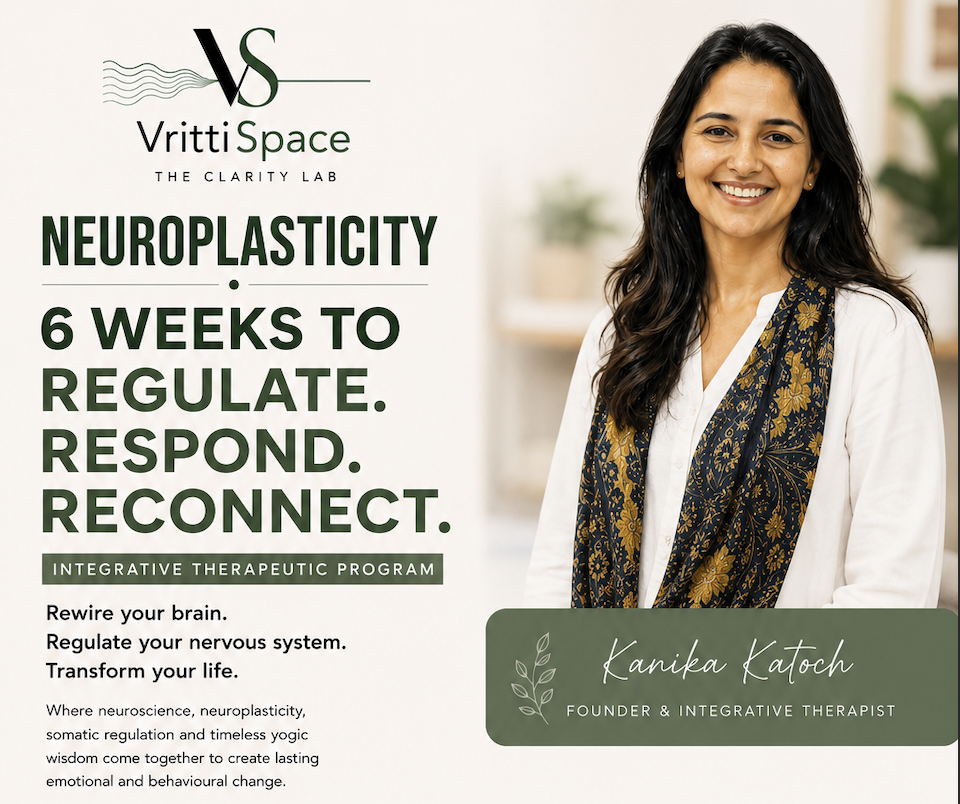
Where neuroscience meets timeless yogic wisdom to create lasting emotional and behavioural change.
6 Week Guided Therapeutic Program
Remote | One-on-One | Personalized
What is Neuroplasticity?
Neuroplasticity, or brain plasticity, is the remarkable ability of the nervous system to adapt, grow, and reorganize its physical structure and functional connections throughout your life. Instead of being fixed at birth, the brain constantly rewires itself in response to new experiences, learning, or injury
Neuroplasticity is your brain's natural ability to reorganize itself by creating new neural pathways throughout life.
Every thought, emotion, habit and behaviour strengthens certain neural circuits. Through intentional practice, those pathways can change—allowing healthier emotional responses, greater resilience and lasting behavioural transformation.
In therapeutic practice, neuroplasticity means:
- Unhelpful thought patterns can be changed.
- Emotional reactions can become more regulated.
- Trauma responses can become less intense over time.
- Healthy habits can become automatic through repetition.
- The brain can develop new neural pathways that support resilience, confidence, and wellbeing.
Neuroplasticity is strengthened through consistent, intentional practices such as:
- Breathwork and nervous system regulation
- Mindfulness and meditation
- Cognitive restructuring (changing unhelpful thinking patterns)
- Behavioural changes and habit formation
- Physical exercise
- Quality sleep
- Learning new skills
- Safe, supportive relationships
- Repeated positive experiences and emotional processing
How Nueroplasticity Happens
Awareness
Recognize unconscious emotional patterns.
↓
Regulation
Calm the nervous system through breath, movement and somatic practices.
↓
Repetition
Daily therapeutic practices strengthen healthier neural pathways.
↓
Integration
New emotional responses become your brain's default way of functioning.
How do we encourage neuroplasticity?
At VrittiSpace, we combine the science of neuroplasticity with somatic regulation, conscious movement, breathwork and timeless yogic wisdom to help your nervous system learn new patterns that support emotional well-being.
The VrittiSpace Method
✔ Integrative Therapeutic Sessions
✔ Personalized Neuroplasticity-Based Healing Plan
✔ Somatic Regulation Techniques
✔ Conscious Body Movements
✔ Breathwork & Yogic Practices
✔ Emotional Pattern Mapping
✔ Daily Guided Abhyas
✔ Progress Reflection
What We Help Rewire
🧠 Emotional Regulation
🧠 Stress & Anxiety Patterns
🧠 Limiting Beliefs
🧠 Habitual Emotional Responses
🧠 Nervous System Dysregulation
🧠 Self-worth & Confidence
🧠 Relationships & Communication
🧠 Resilience & Inner Stability
The Result
Instead of reacting from old conditioning...
You begin responding consciously.
Instead of surviving...
You start living intentionally.
Instead of temporary relief...
You create lasting neural and emotional transformation.
Begin Now:
How to Enhance Neuroplasticity
You can actively leverage neuroplasticity to maintain cognitive fitness and build mental strength as you age:
- Learn New Skills: Engaging in novel activities like learning a language, playing music, or doing complex puzzles forces the brain to form fresh connections.
- Regular Exercise: Physical activity increases blood flow to the brain and promotes the release of neurochemicals that support brain health.
- Prioritize Sleep and Stress Management: Chronic stress can hinder brain adaptation, while quality sleep and meditation promote a healthy, adaptable brain state.
We further integrate areas such as:
- Psychology: Cognitive Behavioral Therapy (CBT), Acceptance and Commitment Therapy (ACT), attachment-based relationships, trauma-informed care, Carl Jung Shadow Work, Freudian Psycho-dynamic therpay, EFT.
- Neuroscience: Nervous system regulation, yogic-informed practices, emotional regulation, neuroplasticity.
- Mind-body practices: Breathwork, mindfulness, yoga, somatic awareness, relaxation techniques.
- Lifestyle medicine: Sleep, nutrition, exercise, stress management, and daily habits.
- Coaching and behavior change: Goal setting, habit formation, accountability, and strengths-based approaches.
- Family systems: Relationship dynamics, parenting support, communication skills, and boundary work.
- Spiritual or philosophical frameworks (when aligned with the client's beliefs): Meaning-making, values clarification, meditation, or traditional wisdom practices like numerology and astrology - Mahadasha ad Antardasha shaping your life design and personality inclinations.